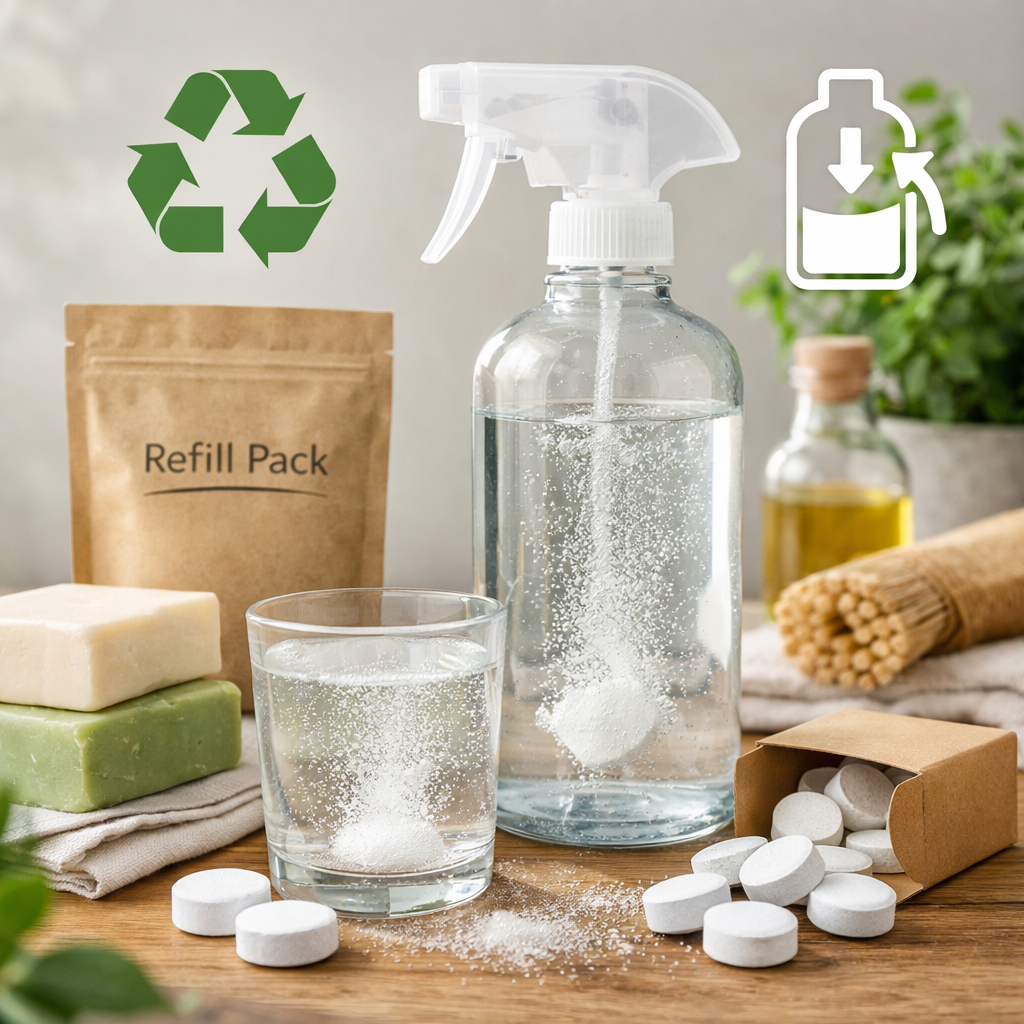
As sustainability becomes a global priority, the cleaning and personal care industry is undergoing a fundamental transformation. From household cleaners to solid soaps, brands and consumers alike are moving away from single-use plastic toward smarter, low-waste solutions. Among the most influential trends shaping this shift are refill cleaning systems and cleaning effervescent tablets.
For soap brands and cleaning product manufacturers, understanding these trends is no longer optional—it is essential for long-term growth, compliance, and brand relevance.
Why Sustainable Cleaning Is No Longer a Trend, but a Standard
Over the past decade, consumers have become more environmentally conscious than ever. Plastic pollution, carbon emissions, and excessive packaging waste have pushed governments, retailers, and end users to demand cleaner solutions.
According to multiple global market reports, sustainability now directly influences purchasing decisions, especially in Europe and North America. Products that reduce plastic, minimize transportation emissions, and support reuse are gaining priority shelf space and higher consumer trust.
This shift has created fertile ground for refill-based cleaning models and solid-format products such as cleaning tablets and bar soaps.
What Is Refill Cleaning?
Refill cleaning refers to products designed to be reused through refill packs rather than discarded after a single use. Instead of throwing away a plastic bottle, consumers simply replenish the product using:
-
Concentrated liquid refills
-
Powder refills
-
Solid bars or tablets dissolved in water
This model dramatically reduces packaging waste and lowers overall environmental impact.
For soap and cleaning brands, refill systems also encourage repeat purchases and long-term customer loyalty.
The Rise of Cleaning Effervescent Tablets
Cleaning effervescent tablets are one of the fastest-growing categories within refill cleaning. These tablets dissolve in water to create a ready-to-use cleaning solution, suitable for kitchens, bathrooms, glass, floors, and even personal care applications.
Why Cleaning Tablets Are Gaining Popularity
-
Ultra-Low Plastic Usage
Tablets are typically packaged in paper boxes, recyclable pouches, or compostable materials. -
Lower Carbon Footprint
Without water weight, transportation emissions are significantly reduced compared to liquid cleaners. -
Space-Saving and Lightweight
Ideal for e-commerce, subscription models, and international shipping. -
Precise Dosage
One tablet equals one bottle—no overuse, no waste. -
Consumer Convenience
Simple “add water and use” instructions appeal to modern lifestyles.
These benefits closely align with the same sustainability values that originally drove the popularity of solid soap bars over liquid body wash.
How Refill Cleaning Connects with the Soap Industry
While refill cleaning is often discussed in the context of household cleaners, it has strong relevance to soap brands, especially those positioned as eco-friendly or premium.
Solid Soap vs. Liquid Soap: A Sustainability Comparison
Solid soap has long been recognized as a more sustainable option due to:
-
Minimal or plastic-free packaging
-
Lower transportation weight
-
Longer usage lifecycle
-
Reduced preservatives
When combined with refill concepts—such as soap bars sold in bulk, paper-wrapped refills, or subscription replenishment models—soap brands can further enhance their environmental positioning.
Hybrid Models: Soap + Refill Cleaning
Many modern brands are now offering both:
-
Solid soaps for personal care
-
Cleaning tablets for household use
This creates a cohesive brand story around waterless cleaning, low-waste living, and sustainable routines.
Global Refill Cleaning Trends
Europe: Regulation-Driven Growth
European markets are leading the refill movement due to strict packaging waste regulations and strong consumer awareness. Refill stations, tablet cleaners, and solid soaps are increasingly common in retail chains.
North America: Convenience Meets Sustainability
In the U.S. and Canada, refill cleaning is growing fastest through:
-
Direct-to-consumer brands
-
Subscription services
-
Online eco-friendly marketplaces
Cleaning tablets and refill soaps perform especially well in e-commerce due to low shipping costs and reduced breakage.
Asia-Pacific: Emerging Opportunities
As sustainability awareness rises, refill cleaning is gaining traction in urban markets, particularly among younger consumers and premium lifestyle brands.
Environmental Benefits of Refill Cleaning and Tablets
Adopting refill systems and cleaning tablets delivers measurable environmental impact:
-
Up to 90% reduction in plastic packaging
-
Significant decrease in transportation-related CO₂ emissions
-
Less water waste in manufacturing
-
Lower storage and warehousing requirements
These advantages are increasingly important as brands face pressure to meet ESG goals and sustainability reporting standards.
Business Advantages for Soap and Cleaning Brands
Beyond environmental benefits, refill cleaning offers strong commercial value:
-
Lower packaging costs
-
Improved logistics efficiency
-
Higher customer retention
-
Clear sustainability storytelling
-
Better alignment with retailer requirements
For OEM and ODM manufacturers, refill and tablet formats also enable faster product innovation and customization for private-label clients.
The Future Outlook: Where Sustainable Cleaning Is Headed
Looking ahead, refill cleaning and cleaning tablets are expected to become mainstream rather than niche. Consumers will increasingly expect:
-
Plastic-free or low-plastic options
-
Transparent ingredient sourcing
-
Compact, refillable formats
-
Multi-purpose cleaning systems
Soap brands that embrace these principles now will be better positioned to scale globally and adapt to future regulations.
Conclusion: A Cleaner Industry Starts with Smarter Formats
The future of sustainable cleaning lies in reducing waste at the source—and refill systems and cleaning effervescent tablets do exactly that. For soap brands, these innovations represent not a disruption, but a natural evolution toward waterless, low-impact, and consumer-friendly products.
By integrating refill concepts into soap and cleaning product lines, brands can meet environmental expectations while unlocking new growth opportunities in a rapidly changing market.