Most cleaning tablet brands lose weeks — sometimes months — not on formulation or marketing, but on the procurement details nobody explains upfront. The real MOQ. What a sample actually proves. Which certificates a retailer will demand. How long production truly takes. This guide walks through the eight procurement questions every brand should resolve before placing an effervescent cleaning tablet order — and what a well-prepared OEM partner should be able to answer without hesitation.

1. MOQ: Why the Number Matters Less Than the Structure
Minimum order quantity is usually the first question a brand asks, and the most commonly misunderstood. A quoted MOQ is not a single fixed number — it is the output of three variables working together: tablet count per SKU, packaging format, and how the tablets are grouped for shipment.
Two brands can receive very different MOQs for the same product simply because one orders 30 tablets per tube and the other orders 120 tablets per refill pouch. Before comparing quotes, confirm that every supplier is quoting against the same three parameters:
- Units per SKU — total tablet count for each individual product variant
- Packaging type — tube, pouch, blister pack, or bulk carton, since each format has its own tooling and filling minimum
- Consolidation logic — whether different SKUs can share a production run, which often lowers the effective MOQ per variant
A practical rule: ask for MOQ expressed in total tablets rather than SKU count, then ask how many SKUs can be combined in one run. This gives you a realistic entry point instead of an inflated headline figure.
2. Sampling: What a Sample Should — and Should Not — Prove
Samples are essential, but they are frequently misread. A sample tablet can confirm dissolution behavior, scent profile, and physical integrity. It cannot confirm production consistency at scale, packaging durability across a supply chain, or whether the formula will behave identically in a 500,000-tablet run.

When reviewing samples, separate what you are testing into three layers:
- Performance layer — dissolution time, cleaning efficacy, residue, and scent retention
- Sensory layer — fragrance intensity, tablet color, surface texture, and any dusting
- Documentation layer — whether the sample arrives with a technical data sheet (TDS) and material safety data sheet (MSDS) that will match production output
The documentation layer is the one brands skip most often, and it is the one that protects them later. A sample without matching documentation tells you what the product does, not what you are legally shipping.
3. Certifications and Compliance Files You Will Actually Be Asked For
Compliance requirements vary by destination market, but a predictable document set covers most retail and e-commerce channels. Request these early, because obtaining them retroactively delays listings:
| Document | What It Covers | Issued |
|---|---|---|
| MSDS / SDS | Safety data for transport, warehousing & marketplace compliance | Per formula |
| COA | Certificate of Analysis confirming batch specification | Per batch |
| TDS | Performance & handling specifications for your product team | Per formula |
| CLP / REACH docs | EU labeling and chemical-registration alignment | Per formula |
| Factory audits | ISO or equivalent manufacturing certifications | Per facility |
Ask specifically which documents are issued per batch versus once per formula. Batch-level traceability is what allows you to respond confidently if a customer or regulator raises a question about a specific shipment.
4. Lead Time: Breaking Down the Real Timeline
Quoted lead times often cover production only, quietly excluding the stages that actually consume calendar time. A transparent timeline should be broken into distinct phases:
- Formulation and refinement — particularly relevant for custom or private label projects
- Sampling and approval rounds — each revision cycle adds time, so clarify how many rounds are included
- Packaging sourcing and print production — printed tubes and pouches frequently take longer than tablet production itself
- Bulk production — the stage most quotes actually describe
- Quality inspection and release — including any third-party inspection you commission
- Shipping and customs — sea versus air freight can change the total timeline by several weeks
Ask for the timeline as a phase-by-phase schedule with dependencies marked, not as a single total. You will immediately see where the risk sits — and it is usually in packaging print, not tablets.
5. Packaging and Labeling: Decide Before Production, Not After
Packaging decisions drive cost, MOQ, and timeline simultaneously. Three choices should be locked before production is scheduled:
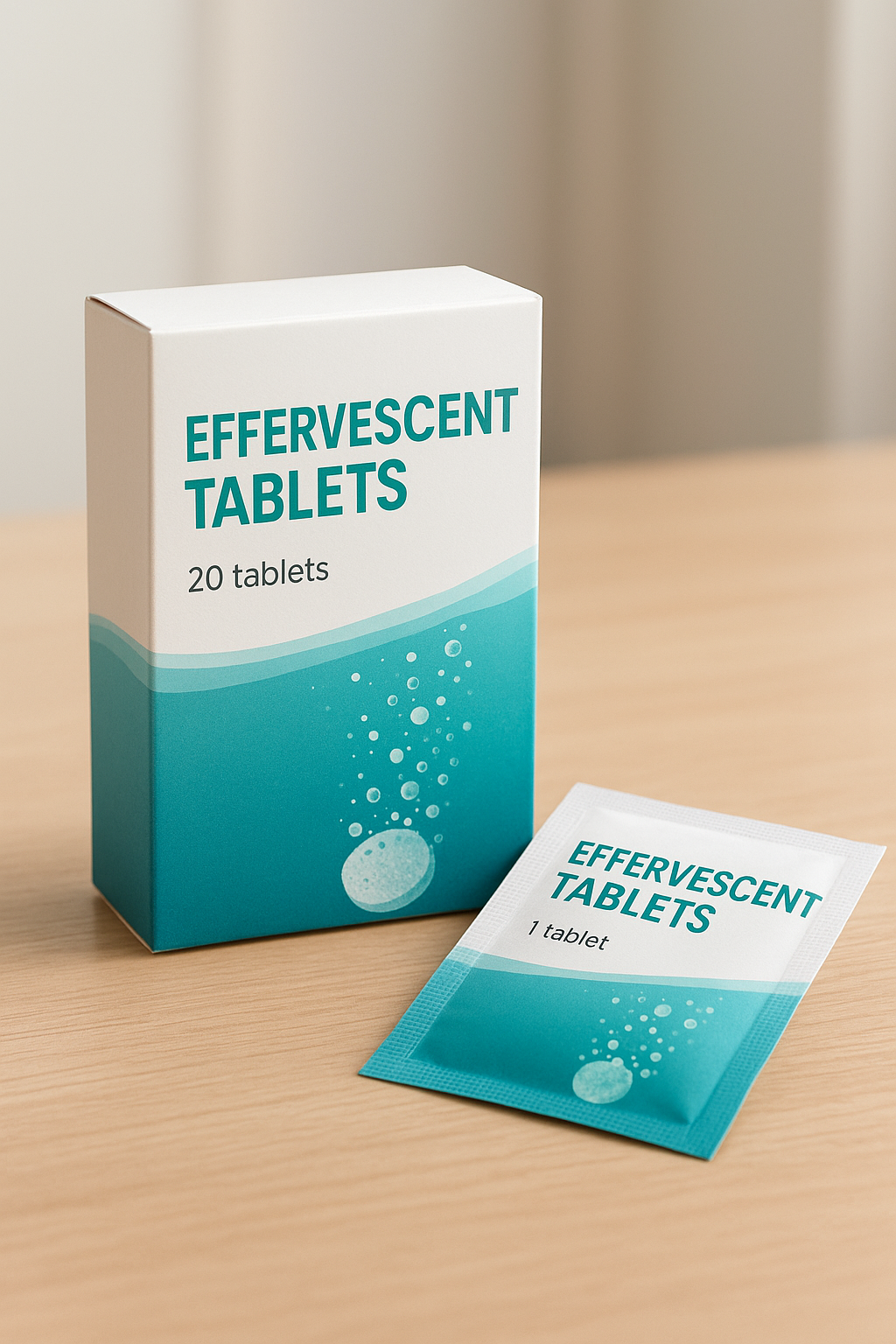
- Format — tube, refill pouch, blister, or bulk. Each carries different tooling requirements and sustainability positioning
- Material — recyclable, compostable, or paper-based options increasingly influence retail shelf decisions
- Labeling content — mandatory regulatory text, ingredient declarations, safety warnings, and country-specific language requirements
Labeling is where compliance and design collide. Confirm the required text for every destination market before artwork is finalized; reprinting packaging is one of the most expensive avoidable costs in a launch.
6. Pricing Structure: What Should Be Included
A unit price without context is not comparable across suppliers. Request pricing that clearly states which of the following are included:
| Cost Element | Ask This |
|---|---|
| Tablet production | Base manufacturing cost per unit |
| Packaging & filling | Quoted separately from tablet production? |
| Printing & tooling | One-time or amortized into unit price? |
| Testing & documents | Is batch testing and certification included? |
| Incoterms & freight | FOB, CIF or DDP — stated explicitly? |
Compare quotes at the same Incoterm. A lower FOB price with unstated freight and duties is not a lower landed cost, and it is the most common source of early-stage margin surprises.
7. Custom vs. Ready-Made Formulas
Deciding between a custom-developed formula and a ready-made one is a question of time, budget, and differentiation. Ready-made formulas reduce development time and cost, but offer less product distinction. Custom formulas create differentiation and stronger brand ownership, but require development cycles, additional sampling, and often regulatory review of new ingredient combinations.
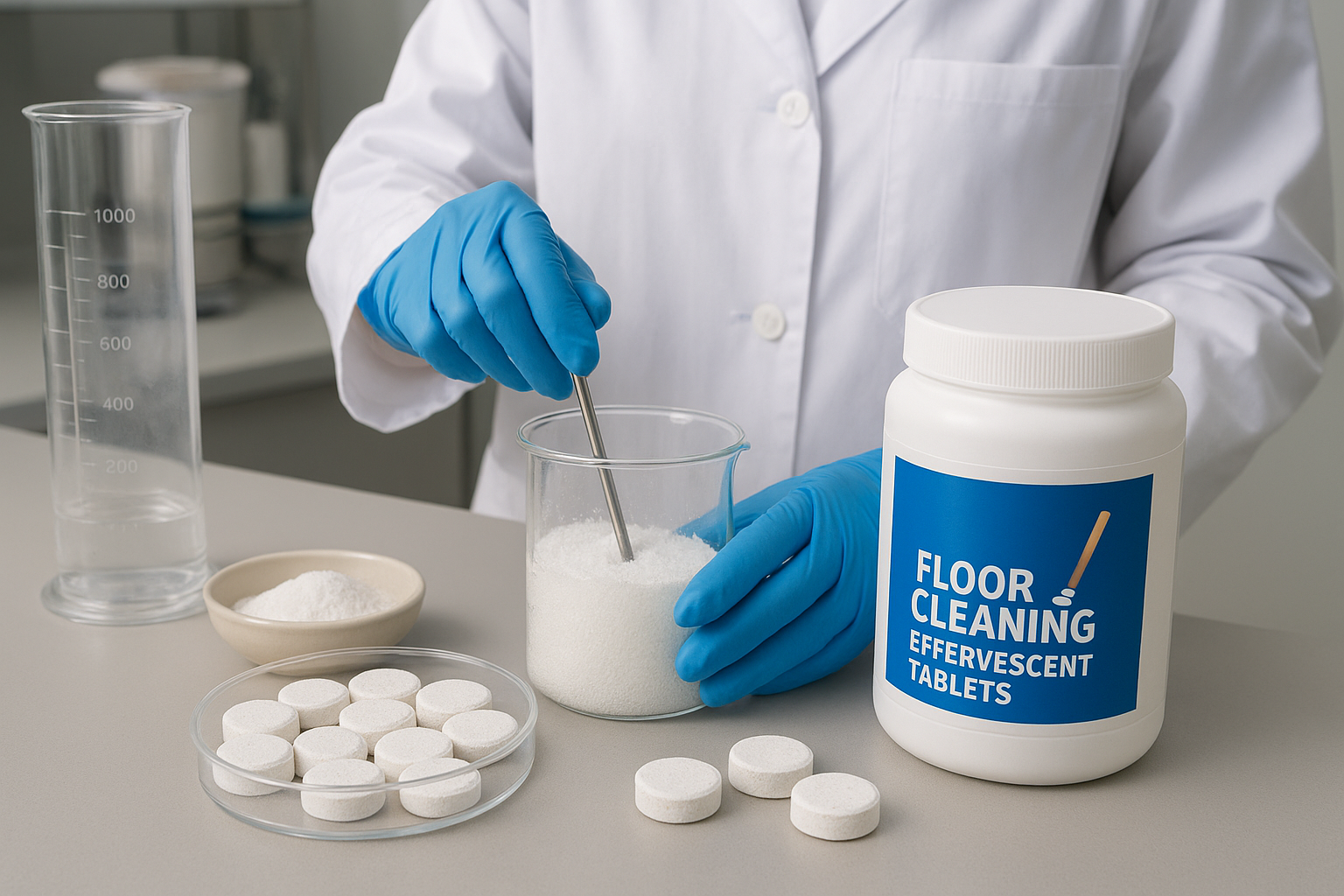
The practical path for most new brands is a staged approach: launch on a proven base formula to validate demand and retail fit, then invest in a differentiated custom formulation once volume and margins are established.
8. Quality Control and Traceability
Quality control is only meaningful if it is traceable. Ask how the supplier links a finished carton back to its production batch, raw material lots, and inspection records. Traceability determines how quickly a supplier can investigate and respond if an issue surfaces after shipment.

At minimum, confirm that incoming raw materials are tested against specification, in-process parameters such as tablet hardness and dissolution time are monitored, and finished goods are inspected before release. A supplier who can describe these steps specifically — rather than describing quality in general terms — is demonstrating the systems behind the promise.
Turning Procurement Questions Into a Partnership
None of these eight areas is complicated on its own. The difficulty is that they interact: MOQ shapes packaging choices, packaging drives lead time, lead time affects your retail commitments, and compliance requirements limit how freely you can adjust labeling later.
Brands that resolve them upfront launch faster and change suppliers less often. The most useful test of a potential OEM partner is not whether they offer the lowest headline MOQ — it is whether they can give you clear, documented answers to all eight questions before you commit. That willingness to be specific is the clearest signal of an operationally mature manufacturer.
Preparing to launch a cleaning tablet line? Explore our OEM/ODM services or talk to our team about your product brief.