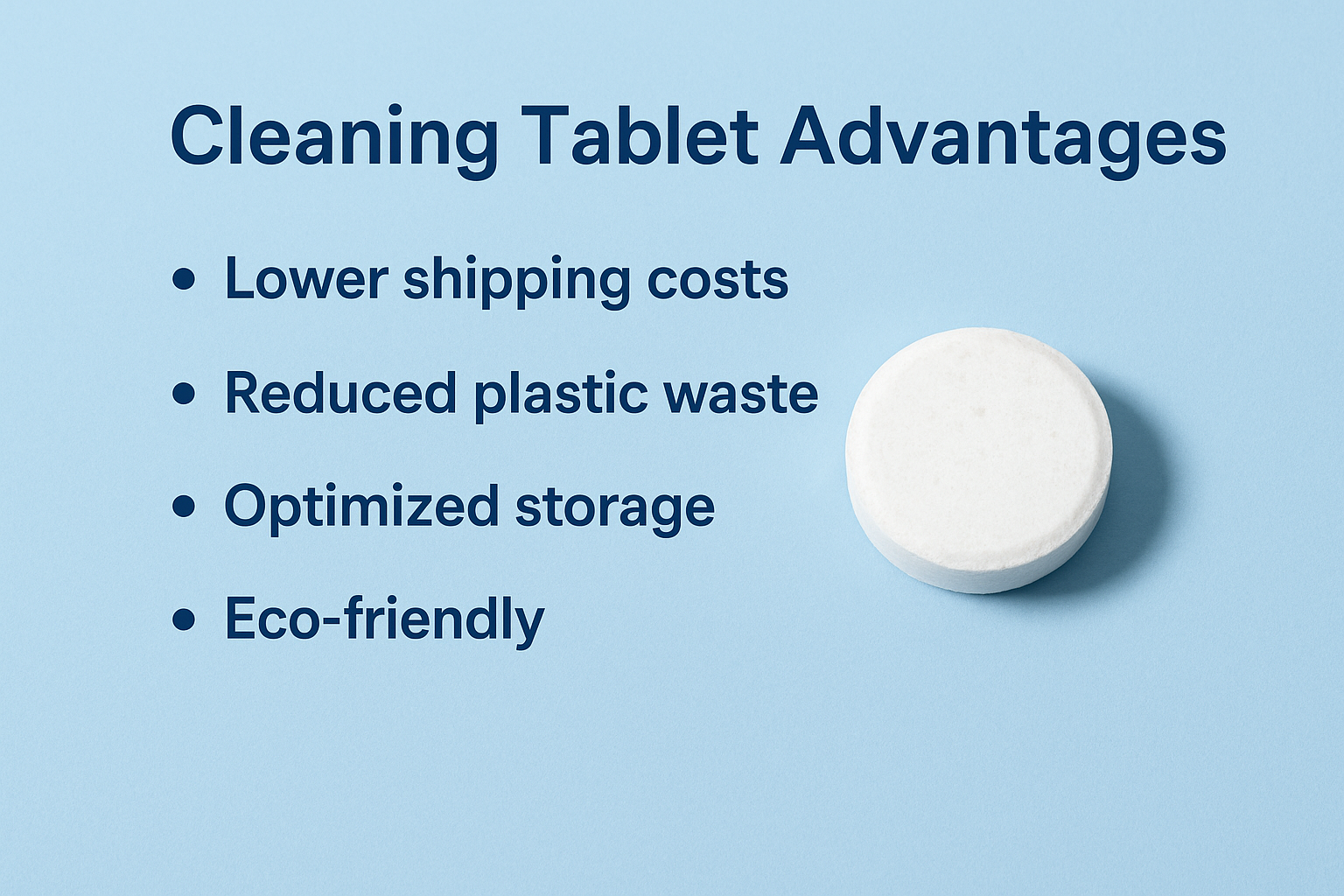
In recent years, the global household cleaning market has been undergoing a significant transformation. More and more brands are moving away from traditional liquid cleaners and embracing cleaning effervescent tablets as a new-generation solution.
This shift is not driven by trend alone. It reflects a deeper strategic decision centered on cost efficiency, sustainable packaging, supply chain optimization, and brand positioning.
In this article, we explore why cleaning tablets are becoming the preferred choice for forward-thinking brands worldwide.
1. Lower Transportation Costs Through Lightweight, Concentrated Design
One of the biggest hidden costs in traditional liquid cleaners is transportation.
Most liquid detergents consist of 80–90% water, meaning brands are shipping weight and volume that add no functional cleaning value.
Cleaning effervescent tablets solve this problem at the source.
Because they are highly concentrated solid formulations, tablets only contain active cleaning ingredients. Water is added by the consumer at the point of use. This simple change creates major commercial advantages:
-
Up to 70–90% reduction in shipping weight
-
Higher container utilization per shipment
-
Lower international freight and fuel costs
-
Reduced carbon emissions during transportation
For brands operating in cross-border e-commerce, wholesale distribution, or global retail, cleaning tablets offer a scalable way to control logistics expenses while improving sustainability metrics.
2. Reducing Plastic Bottles and Supporting Sustainability Goals
Plastic waste is no longer just an environmental concern—it is a brand credibility issue.
Consumers, retailers, and regulators are increasingly demanding reductions in single-use plastics.
Traditional cleaning products rely heavily on:
-
Plastic bottles
-
Spray triggers
-
Multilayer labels
Cleaning tablets naturally enable low-plastic or plastic-free packaging systems, such as:
-
Paper boxes or recyclable cartons
-
Aluminum or compostable sachets
-
Refillable spray bottles paired with tablet refills
By switching to tablets, brands can significantly reduce plastic consumption and clearly communicate their sustainability commitment.
This not only helps meet ESG and regulatory expectations, but also strengthens brand trust among eco-conscious consumers who actively seek greener alternatives.
3. Inventory and Warehouse Optimization for Modern Supply Chains
From a supply chain perspective, cleaning effervescent tablets are far more efficient than liquid cleaners.
Smaller Volume, Higher Density
Tablet products take up less space per cleaning use, allowing brands to store more units in the same warehouse footprint.
Improved Stability and Shelf Life
Without water, tablets are less prone to freezing, leaking, separation, or microbial growth. When properly packaged, they offer excellent formulation stability and reduced risk of inventory loss.
More Flexible SKU Management
Brands can easily expand product lines by varying tablet formulas, fragrances, or functions—without the complexity of managing bulky liquid SKUs.
These advantages make cleaning tablets particularly suitable for DTC brands, e-commerce sellers, subscription models, and international distributors.
4. Elevating Brand Image Through Innovation and Differentiation
Cleaning tablets are not just a packaging change—they represent a modern, innovative approach to household cleaning.
For brands, this means:
-
Differentiation from traditional, commoditized liquid cleaners
-
A stronger innovation narrative focused on concentration, efficiency, and sustainability
-
Clear storytelling opportunities around refill systems and waste reduction
Many premium and emerging brands are using cleaning tablets to reposition themselves as future-oriented, responsible, and design-driven, rather than competing solely on price.
In crowded markets, this differentiation can be critical for long-term growth.
5. A Better Fit for Global Compliance and Retail Requirements
International markets increasingly emphasize safety, labeling clarity, and environmental responsibility.
Cleaning effervescent tablets can be formulated to meet major regulatory standards, including:
-
Reduced hazardous transport classifications
-
Precise dosing to minimize overuse
-
Compatibility with global chemical safety frameworks
For brands expanding into Europe, North America, or other regulated markets, tablets can simplify compliance while improving consumer safety and experience.
6. Why Brands Choose Professional Cleaning Tablet Manufacturers
While the benefits of cleaning tablets are clear, successful products depend on professional manufacturing expertise.
High-quality cleaning tablets require:
-
Precise formulation balance
-
Consistent mixing and tablet compression
-
Controlled dissolution speed and cleaning performance
-
Moisture-resistant packaging solutions
-
Regulatory documentation and testing support
This is why most brands choose to partner with experienced cleaning tablet OEM/ODM factories rather than attempting in-house development.
A reliable manufacturing partner ensures product consistency, scalability, and compliance—allowing brands to focus on marketing and growth.
Conclusion: Cleaning Tablets Are More Than a Trend
The growing adoption of cleaning effervescent tablets reflects a fundamental shift in how brands think about cost, sustainability, and product design.
By reducing transportation weight, minimizing plastic waste, optimizing inventory, and elevating brand positioning, cleaning tablets deliver both immediate operational benefits and long-term strategic value.
For brands looking to stay competitive in the evolving household cleaning market, switching to cleaning tablets is no longer just an option—it is a smart, future-ready decision.