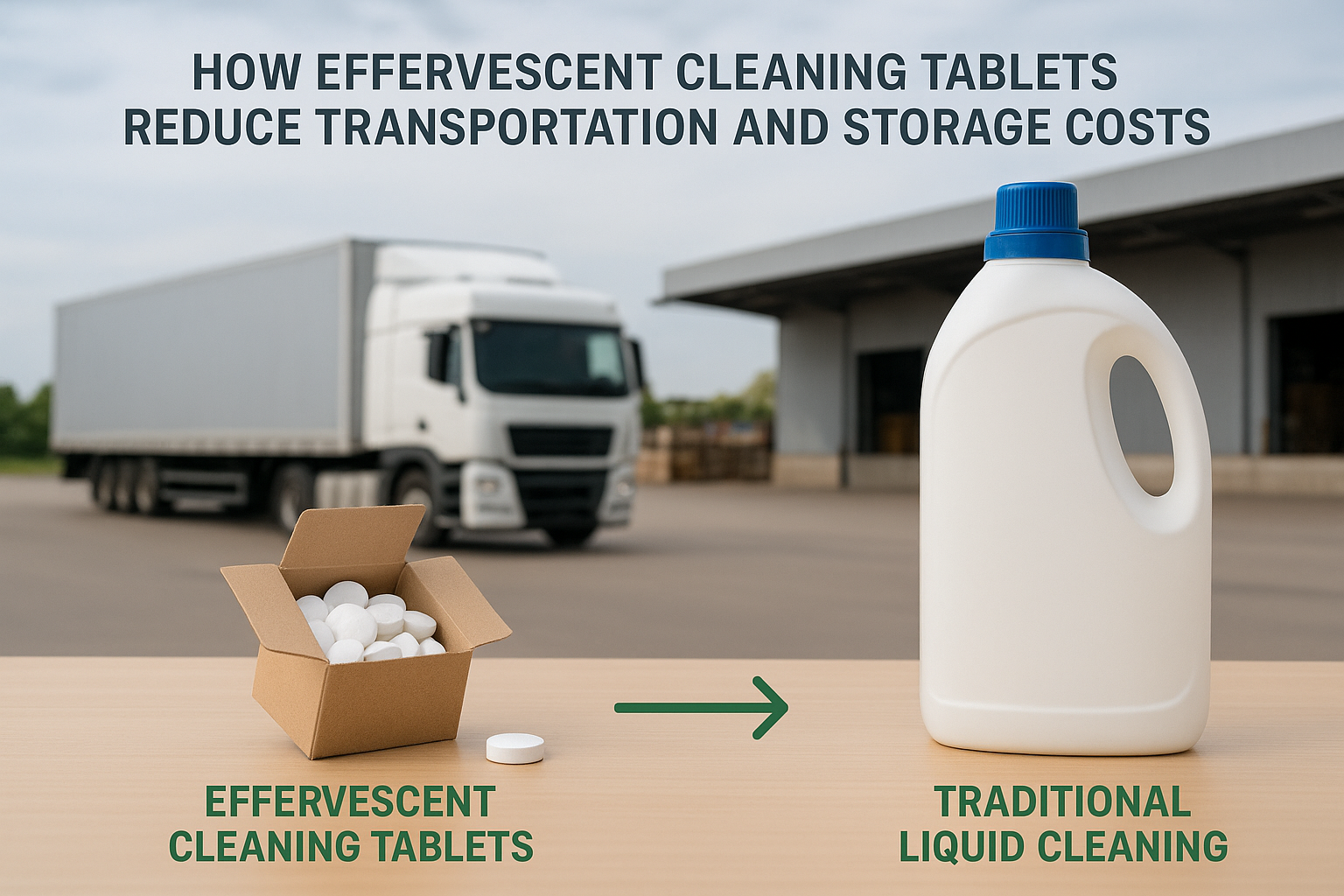
1. The Weight Problem of Traditional Cleaning Products
Conventional cleaning products—especially liquids—contain up to 90% water, meaning companies are essentially paying to ship heavy, water-filled bottles.
This leads to:
-
Higher freight charges per shipment.
-
Increased carbon emissions.
-
More storage space required in warehouses and retail facilities.
As global fuel prices fluctuate and logistics become more complex, brands are turning to lightweight packaging solutions to stay competitive.
2. Effervescent Tablets: The Lightweight Cleaning Revolution
Effervescent cleaning tablets eliminate unnecessary bulk by removing water from the equation. Each tablet is a compact, concentrated dose of cleaning power that activates instantly when mixed with water.
Key advantages include:
-
Up to 90% reduction in shipping weight.
-
Smaller packaging footprint, allowing more units per carton or pallet.
-
Simplified inventory management, reducing warehouse space requirements.
This lightweight design translates directly into lower shipping and warehousing costs, making it a win-win for both manufacturers and distributors.
3. How Effervescent Tablets Optimize Logistics
Effervescent tablets enable logistics optimization at every stage of the supply chain:
a. Transportation Efficiency
Fewer trucks or containers are needed for the same product volume. This reduces:
-
Freight and fuel costs
-
Emissions per shipment
-
Handling effort at ports or distribution centers
b. Storage Optimization
Because of their compact size, cleaning tablets require less warehouse space—allowing for improved inventory turnover and easier stock management.
c. Simplified Distribution
Lightweight packaging means distributors can ship directly to retail stores, schools, hotels, or offices without the need for heavy-duty transport infrastructure.
4. Environmental Benefits of Efficient Logistics
Reducing shipping weight isn’t just about saving money—it’s also about sustainability.
Effervescent cleaning tablets contribute to eco-friendly logistics by:
-
Cutting down on fuel use and CO₂ emissions.
-
Reducing packaging waste.
-
Supporting sustainable supply chain practices that align with corporate ESG goals.
In essence, every shipment of effervescent tablets helps reduce the environmental footprint of the cleaning industry.
5. A Cost Comparison: Liquid vs. Tablet-Based Cleaning
| Aspect | Traditional Liquid Cleaners | Effervescent Cleaning Tablets |
|---|---|---|
| Average Weight per Unit | 500–1000g | 10–15g |
| Shipping Volume (per pallet) | ~500 units | ~10,000 tablets |
| Storage Requirements | High | Low |
| CO₂ Emissions per Shipment | High | Reduced by up to 80% |
By transitioning to effervescent tablets, companies can save up to 60% in logistics costs while boosting sustainability performance.
6. Business Advantages Beyond Cost
For B2B cleaning brands, adopting effervescent cleaning tablets offers additional commercial benefits:
-
Improved scalability – easier international shipping and distribution.
-
Brand differentiation – appeal to eco-conscious clients and retailers.
-
Longer shelf life – dry tablets are more stable than liquid formulas.
This combination of cost-efficiency and environmental responsibility makes effervescent tablets a compelling innovation for modern cleaning brands.
Conclusion: Lighter, Smarter, and More Sustainable
Effervescent cleaning tablets redefine what it means to ship and store cleaning products. Through lightweight packaging and logistics optimization, they allow companies to cut expenses, reduce carbon emissions, and improve supply chain sustainability—all while maintaining high cleaning performance.
In a world where efficiency and eco-consciousness go hand in hand, these tablets are not just a cleaning solution—they’re a smarter way to do business.